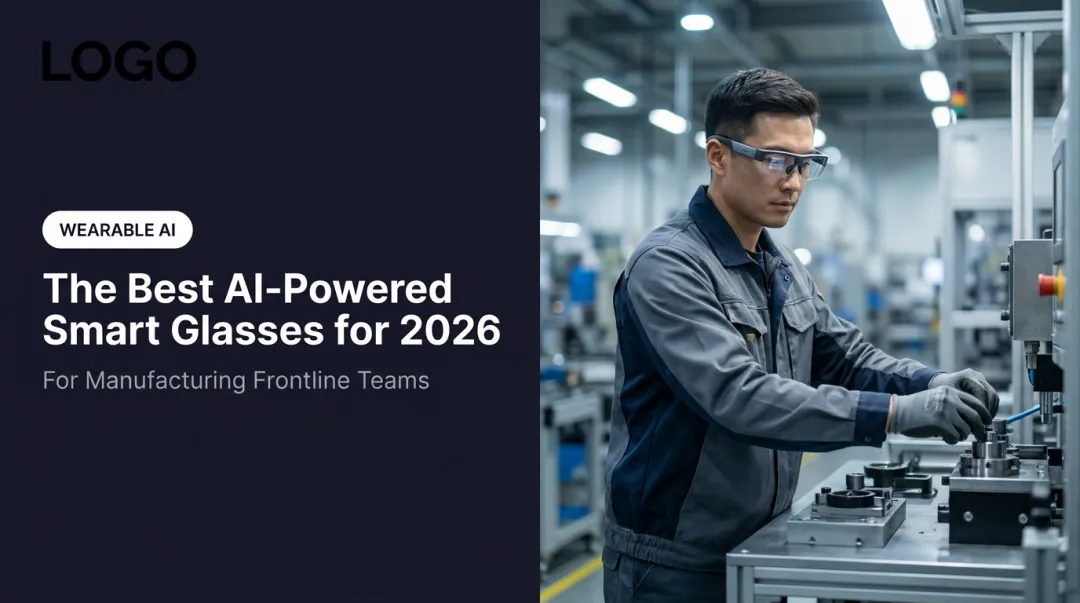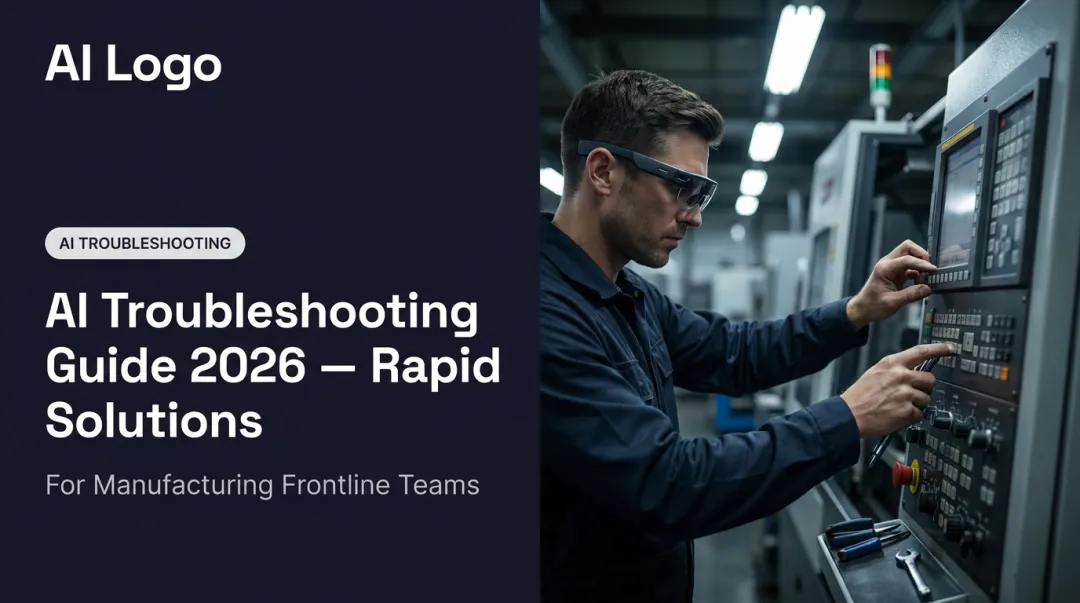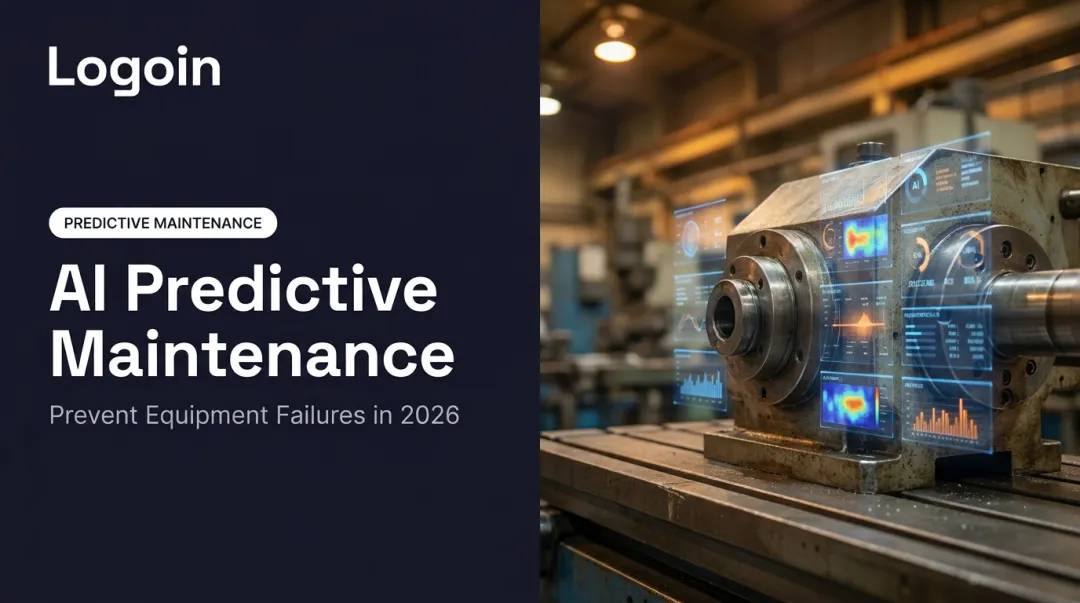
The challenge isn't finding AI glasses. It's choosing the right type. Display vs. audio-only, consumer vs. enterprise, standalone vs. phone-dependent — these distinctions matter more than any spec sheet. Pick the wrong category and you'll have expensive paperweights within a month.
This guide cuts through it with hands-on picks across five distinct use cases: everyday wearability, minimalist AR display, value-focused display+AI, enterprise field operations, and standalone AI computing.
Key Takeaways
- Best overall: Ray-Ban Meta Gen 2 — best combination of comfort, style, and AI capability at $379
- Best minimalist display: Even Realities G2 — surfaces useful information without the sci-fi look
- Best value: Rokid AI Glasses Style — multi-LLM AI and 4K camera, starting at $299
- Best enterprise: Vuzix Z100 — built for full-shift industrial use with no compromises
- Best standalone: RayNeo X3 Pro — full-color AR display with Gemini Live, fully untethered at $1,299
AI Glasses in 2026: What's Changed
AI glasses for industrial and enterprise use have split into two working categories:
- Audio/voice-first AI glasses — no display; AI responses delivered through open-ear speakers, hands-free throughout the shift
- AR display glasses — transparent overlay surfaces contextual information directly in the operator's field of view
This guide covers AI glasses and AR glasses deployed in manufacturing and industrial operations. Consumer entertainment devices are out of scope.
What's actually different in 2026
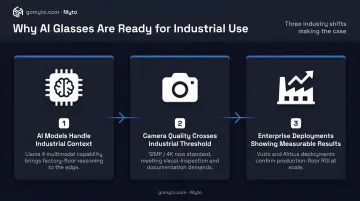
Several shifts have made AI glasses genuinely useful on the factory floor — not just promising:
- AI models now handle real industrial context. Meta's Llama 4 family introduced models that process text, images, and voice together in a single pass. This makes visual AI tasks — reading equipment labels, identifying fault codes, parsing handwritten logs — fast and reliable enough for production environments.
- Camera quality crossed the threshold for industrial work. 12MP sensors with 4K video are now standard. Object identification, live documentation capture, and scene description work consistently under factory lighting conditions.
- Enterprise deployments are producing measurable results. Vuzix announced warehouse and logistics deployments for a major multinational in 2025, and AR-assisted maintenance workflows at companies like Airbus have shown documented efficiency gains on repair and inspection tasks.
The products below were evaluated on AI performance, wearability during extended shifts, hands-free usability, and fit for frontline manufacturing roles.
The Best AI Glasses We've Tested for 2026
These picks span categories to serve different users — everyday professionals, display-first minimalists, value buyers, enterprise field workers, and executives needing hands-free computing. Evaluation criteria: AI quality, display (where applicable), battery, comfort, and value.
Ray-Ban Meta Gen 2
The most mainstream AI glasses on the market. A Meta and EssilorLuxottica collaboration in classic Ray-Ban frames (Wayfarer, Headliner, and Round) running Meta AI. EssilorLuxottica sold over 7 million pairs in 2025 alone, and the trajectory continues upward. These set the benchmark for style and usability that every other pair is measured against.
What sets them apart is the combination of capable hardware and tight social integration. The 12MP ultrawide camera handles visual AI queries well : point at something, ask a question, get a useful answer. The 5-mic array picks up voice in genuinely noisy environments. Live translation now spans six languages (expanded with Gen 2), covering real travel and work scenarios.
Battery performance is a genuine strength: 8 hours per charge, extended to 48 hours total with the charging case. That's a full workday plus.
| Feature | Spec |
|---|---|
| AI Platform | Meta AI — voice + visual queries, live translation (6 languages), scene description |
| Camera & Audio | 12MP ultrawide, 3K@30fps video, open-ear stereo, 5-mic array |
| Battery & Price | 8h per charge / 48h with case; $379; prescription compatible |
Even Realities G2
The G2 has a clear thesis: show you useful information without looking like you're wearing a prototype. It succeeds. Thin frames, binocular microLED display with waveguide optics, and an optional R1 smart ring for gesture control : this looks like regular glasses with a very subtle display edge.
The heads-up display is text-optimized and narrow by design. You get notifications, navigation prompts, AI responses, and live subtitles via Conversate without the visual overload of a wider field-of-view display. It's explicitly not designed for media or gaming, which is the point. Professionals who want ambient information without screen fatigue will find this approach works well.
At 36 grams, it's light enough to forget you're wearing it. IP65 rated for dust and water resistance. Prescription support spans a wide range. The G2 is also camera-free — a privacy-first design choice that some buyers will specifically seek out.
| Feature | Spec |
|---|---|
| Display | Binocular microLED, waveguide optics — text-optimized, narrow FoV |
| Use Cases & Weight | Notifications, navigation, AI responses, live transcription; 36g |
| Connectivity & Price | Bluetooth (phone companion); $599; R1 smart ring $249 separately |
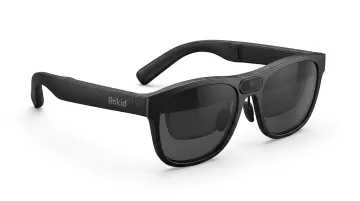
Rokid AI Glasses Style
Rokid has been building AR hardware for years, and the Style represents their push into the consumer AI glasses market. It's a strong value proposition: a 12MP Sony IMX681 sensor with 4K video, multi-LLM AI stack, and a starting price of $299 (currently listed at $349 on the official product page).
What makes the AI stack stand out: Rokid supports ChatGPT, DeepSeek, and Qwen as selectable AI engines and you can switch based on preference or task. That flexibility is unusual at this price point. Battery performance is also competitive: the internal battery handles approximately 12 hours of typical daily use, with a 3,000mAh charging case and a 1,700mAh capsule battery available as add-ons.
Rokid reported over 15,000 units sold worldwide as of February 2026 and distribution through select US retail channels. For buyers who want both AI vision and camera capability without paying Meta prices, this is the strongest option at this tier.
| Feature | Spec |
|---|---|
| AI Platform | Multi-LLM (ChatGPT, DeepSeek, Qwen switchable) — visual AI |
| Camera & Battery | 12MP Sony IMX681, 4K@30fps; ~12h daily use (optional 3,000mAh case) |
| Price & Availability | Starting at $299 (currently $349); available via brand website and select US retailers |
Vuzix Z100
Vuzix has spent over a decade deploying AR hardware in enterprise environments. The Z100 is their most refined product yet : a see-through waveguide display built specifically for warehouse, logistics, healthcare, and manufacturing field-service workflows.
The monocular display preserves depth perception — which matters in environments where workers move around equipment and handle materials all day. The Z100 pairs via Bluetooth with Android and iOS devices and supports enterprise app deployment through Vuzix's SDK ecosystem and Vuzix Connect platform.
Standout spec for industrial buyers: up to 48 hours on a single charge. That covers multi-shift operations without mid-day charging. The device is sold through enterprise channels, not retail ; pricing is negotiated directly with Vuzix based on deployment scale.
For manufacturing teams, the Z100 pairs well with operational intelligence platforms like Myto, which convert what operators see on the floor into structured knowledge — feeding auto-generated SOPs and troubleshooting context back into the workflow.
| Feature | Spec |
|---|---|
| Display & Connectivity | See-through waveguide display; Bluetooth pairing with Android/iOS |
| Enterprise Features | Remote assistance, enterprise app deployment, IoT data augmentation |
| Battery & Pricing | Up to 48h battery; enterprise pricing via Vuzix direct — not sold at retail |
RayNeo X3 Pro
The most capable standalone AI glasses on this list. Built on Qualcomm Snapdragon AR1 Gen 1 and running RayNeo AIOS, this is an independent computing platform. No phone required for core AI features. Gemini Live integration (Gemini 2.5 on the UK product page) is built directly into the OS.
The full-color binocular MicroLED waveguide display projects the equivalent of a 43-inch transparent screen. AR navigation overlays directions onto the road. Visual translation projects subtitles directly into your field of view. The 12MP camera handles visual AI queries well in testing.
Battery is the honest trade-off. The official specs list up to 5 hours of recording and 3 hours of music playback ; real-world AI-intensive use lands somewhere in that range. This isn't an all-day device under heavy load.
At $1,299, it's priced for professionals and executives who genuinely need standalone hands-free computing : travelers, field consultants, and executives managing complex workflows away from a desk.
| Feature | Spec |
|---|---|
| AI & Display | Gemini Live; full-color binocular MicroLED waveguide; standalone, no phone required |
| Key Features | AR navigation, real-time subtitle translation, 12MP camera, visual AI queries |
| Battery & Price | Use-case variable (up to 5h recording); $1,299; prescription via magnetic inserts |
What to Look for in AI Glasses for Industrial and Professional Use
Consumer buying criteria — style, social media integration, entertainment — don't apply here. Industrial buyers need a different checklist entirely.
The criteria that actually matter for manufacturing
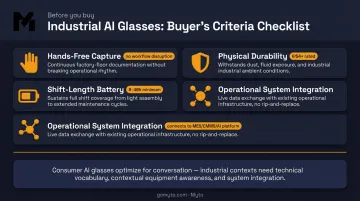
- Hands-free capture without workflow disruption — operators can't stop to tap a button or adjust glasses; capture should happen in the natural flow of work
- Shift-length battery — 8+ hours minimum; ideally 24-48 hours for multi-shift environments
- Physical environment durability — IP rating matters; look for at least IP54 (dust-protected, splash-resistant) for most factory floors
- Integration with operational systems — glasses that don't connect to MES, CMMS, or an AI platform are glorified cameras
Why AI model quality works differently in industrial settings
Consumer AI glasses optimize for natural conversation and social use. Industrial contexts need technical vocabulary, contextual awareness of specific equipment, and the ability to feed observations into a broader operational system — none of which most consumer devices deliver.
Audio-only AI responses fall short when workers are in loud environments or both hands are occupied. Visual overlay and documentation capabilities matter more. A maintenance tech needs to see the right SOP overlaid on the machine, not listen to an AI read it aloud over compressor noise.
The glasses are only part of the answer. Pairing them with a platform that structures what operators see and do into reusable operational knowledge is where the real value lives. Myto does exactly this: wearable AI capture combined with agentic AI that auto-generates SOPs, assembles shift handoff documentation, and surfaces troubleshooting context automatically — without adding steps for the operator.
Data security and deployment complexity
For industrial buyers, these are non-negotiable:
- On-device vs. cloud processing options — sensitive operational data needs clear handling policies
- Role-based access controls — who sees captured footage and structured outputs matters
- Minimal IT infrastructure requirements — frontline teams cannot absorb complex, slow deployments
- Configurable compliance posture — recording consent, data residency, and retention requirements vary by plant and jurisdiction
How We Chose These AI Glasses
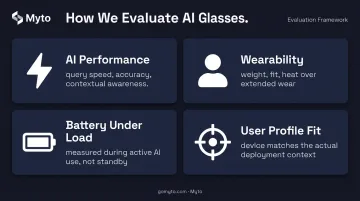
Each pair was evaluated across four dimensions — tested under real conditions, not manufacturer specs:
- AI performance: Query speed, response accuracy, and contextual awareness in active use
- Wearability: Weight, frame fit, and heat buildup over extended periods
- Battery under load: Measured during active AI use, not standby claims
- User profile fit: Whether the device actually suits the context it's marketed for
Common mistakes buyers make
- A 4K camera is useless if the device dies at hour 6 — match specs to your actual use case, not the other way around
- Skip the display if audio-first works for your context — visual overlays add weight and cut battery life without always improving the experience
- Active AI use, continuous recording, and live translation drain batteries far faster than standby ratings suggest — test under load before you commit
- Glasses are the capture layer, not the value layer — in professional and industrial settings, what matters is what system they feed into
Conclusion
The right AI glasses in 2026 depend entirely on what you need them to do. For everyday professionals, the Ray-Ban Meta Gen 2 is the clearest starting point — mature AI, great battery, glasses you'll actually wear. For enterprise and industrial teams, the Vuzix Z100's shift-length battery and enterprise deployment ecosystem, or the RayNeo X3 Pro's standalone computing capability, offer the depth that operational environments need.
For manufacturing teams specifically: the glasses are the capture layer, not the solution. What determines whether the investment pays off is the system behind them — the one that converts what operators see and do into faster troubleshooting, structured documentation, and knowledge that builds on itself over time.
Manufacturing teams evaluating AI glasses for frontline knowledge capture can see how Myto's platform connects wearable hardware to agentic AI that troubleshoots issues, generates SOPs, and captures operator expertise as work happens. Book a discovery call at gomyto.com to see how the hardware and platform work together.
Frequently Asked Questions
Are AI glasses worth buying in 2026?
For most professionals and consumers, yes. AI models are meaningfully better, battery life has improved, and use cases have matured past the novelty stage. The right answer depends on context: consumer everyday use, professional productivity, and industrial operations each have different viable picks at different price points.
What is the difference between AI glasses and AR glasses?
AI glasses (like the Ray-Ban Meta Gen 2) have no display — AI responses come through open-ear audio. AR glasses add a transparent display for visual overlays like navigation, subtitles, and notifications. Both can run AI, but the delivery mechanism and form factor differ significantly.
How long do AI glasses batteries last?
It varies by type and use intensity. Audio-only AI glasses typically last 6–8 hours per charge (up to 48 hours with a charging case). Standalone AR glasses with active displays and continuous AI processing will deliver significantly less — typically 2–4 hours. Plan for use-case-specific ranges rather than single headline numbers.
Can AI glasses be used in industrial or manufacturing environments?
Enterprise-grade models like the Vuzix Z100 are purpose-built for industrial use with a 48-hour battery and proper enterprise deployment support. Consumer models can work in lighter industrial settings but lack the durability, data security controls, and operational integration capabilities that serious deployments require.
Do AI glasses require a subscription to use AI features?
Hardware is typically a one-time purchase, but advanced AI features — cloud translation, live AI assistance, certain Gemini capabilities — may be subject to future pricing tiers. Current official pages for Meta and RayNeo do not list required paid AI subscriptions, but confirm current terms before committing.
What should manufacturing teams look for when evaluating AI glasses?
Focus on shift-length battery, hands-free capture without workflow disruption, IP-rated durability, and data security with minimal IT complexity. Also evaluate whether the glasses connect to an operational intelligence platform that turns captured data into actionable knowledge. Hardware alone doesn't solve the knowledge capture problem.